
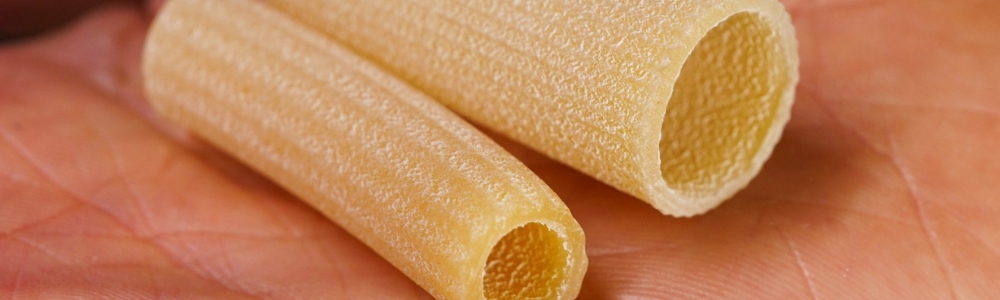
Among the many short pasta shapes, Rigatoni and Paccheri share one distinctive feature: their hollow, tubular shape, designed to hold sauce inside. Yet a closer look at their diameter, surface and wall thickness reveals two very different eating experiences. The difference between Rigatoni and Paccheri goes well beyond appearance: each shape interacts with sauce in its own way, offering a different texture, bite and overall balance on the plate.
Benedetto Cavalieri Rigatoni measure 45 mm in length and 18 mm in diameter. They feature 36 ridges along their surface and thinner walls than Mezzi Rigatoni, giving the two shapes distinct cooking characteristics and textures. Benedetto Cavalieri Paccheri have the same length but a wider diameter of 25 mm and a wall thickness of 1.70 mm. These smooth-sided Paccheri have a larger hollow centre and a particularly substantial, satisfying bite.
Although these two types of pasta share a similar geometry, they interact differently with their accompanying sauces. Rigatoni hold sauce within their ridges and central opening, creating a balanced combination of pasta and seasoning. Paccheri provide more room for sauce inside their wider cavity, while bringing the texture and body of the pasta itself to the forefront.
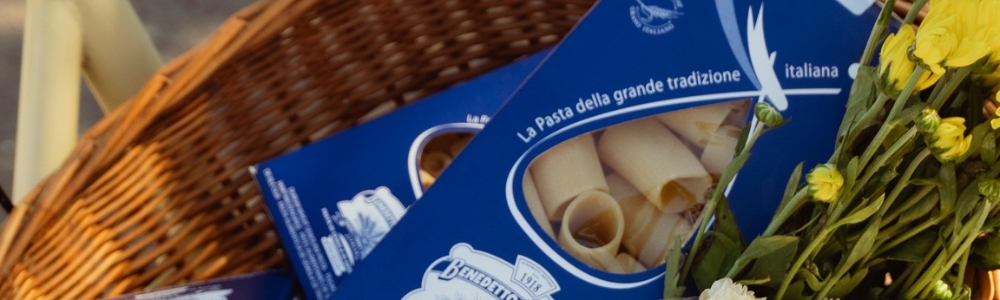
The history of these pasta shapes is closely connected to the development of extruded macaroni. Between the 16th and 19th centuries, advances in pasta presses and extrusion dies enabled Italian pasta makers to produce hollow shapes with different diameters, lengths and surfaces. This marked an important development in pasta making: changing the opening through which the dough was extruded expanded the possibilities of dried pasta and gave Italian creativity new ways to express itself.
The name Rigatoni comes from rigato, the Italian word for “ridged”, and refers directly to the grooves running along the pasta’s surface. Rigatoni are particularly associated with the culinary traditions of Central and Southern Italy, where they feature in numerous preparations, including some of the best-known dishes of Roman cuisine.
Paccheri, on the other hand, have strong roots in Campania and Neapolitan culinary tradition. In the Neapolitan dialect, pacchero refers to a slap delivered with an open hand, which also explains the popular nickname schiaffoni. According to a traditional explanation, the name evokes the sound these large pasta tubes make when poured onto a plate or vigorously tossed with sauce.
Every shape of dried pasta begins with a carefully selected blend of durum wheat semolina and water, but its final form depends on the extrusion die through which the dough passes. In the Benedetto Cavalieri Metodo Delicato (Delicate Method), each pasta shape has its own dedicated die, made from special bronze alloys. The openings are designed to guide the dough gently through the extrusion process, following extended mixing, slow kneading and pressing.
The die determines the geometry of the pasta: for Rigatoni, it creates a tubular shape with 36 ridges, while for Paccheri, it produces a wider tube with no grooves. These two geometries create different relationships between pasta and sauce, resulting in a distinct eating experience. In both cases, bronze-die extrusion contributes to a rough, porous surface that encourages the pasta and its sauce to come together in a harmonious whole.
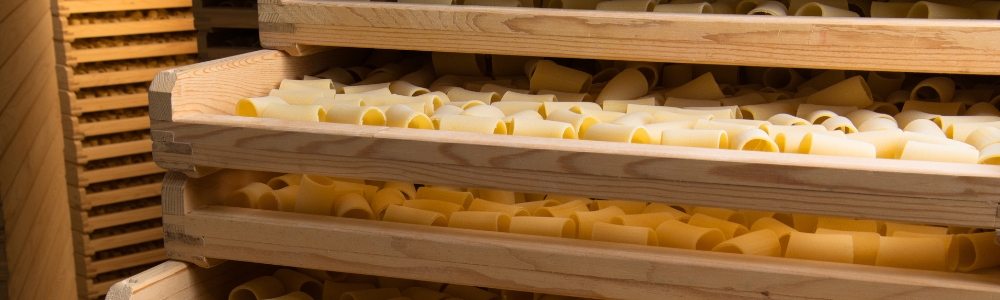
The extrusion die establishes the thickness of the pasta walls, but their final structure also depends on the drying process. With the Metodo Delicato, once cut, the short pasta shapes enter the drying chamber, where moisture is removed gradually through alternating periods of gently warmed airflow and rest. Air temperatures never exceed 54°C, and the process takes between 20 and 40 hours, depending on the shape and thickness of the pasta. This careful balance of time and temperature helps preserve the flavour of durum wheat and the pasta’s natural texture.
During cooking, the process is reversed: water gradually penetrates the dried pasta walls, rehydrating their structure. This is why pasta cooking time depends primarily on wall thickness rather than simply on the length or external diameter of the shape. With Paccheri, their substantial thickness makes tasting during cooking particularly important, ensuring the right balance between tenderness and firmness.
The best sauces for Rigatoni generally combine a creamy or well-bound base with ingredients that retain some texture. A meat ragù that is not overly liquid settles into the ridges and fills the hollow centre, while a sauce made with tomato passata and diced aubergines creates a pleasing contrast between softer and more substantial elements.
Rigatoni also have a special place in Roman culinary tradition. In Rigatoni all’Amatriciana, the tomato sauce combines with the rendered fat of the guanciale, coating the pasta’s surface, while Pecorino cheese brings the final elements together during the finishing stage. The result is a carefully balanced combination in which neither pasta nor sauce overpowers the other.
Among the best sauces for Paccheri, seafood sauces featuring clearly defined ingredients are particularly well suited to this large pasta shape. A reduced cherry tomato sauce with squid or prawns, carefully combined with the pasta, coats its surface and gathers inside its generous hollow centre. Sautéed broccoli, with some florets left whole and others softened into a creamy consistency, also complement the substantial texture of Paccheri, especially when finished with a sprinkling of Pecorino Romano.
Their generous diameter also makes Paccheri ideal for stuffed pasta dishes. They can be partially cooked in boiling water, then arranged upright in a baking dish and finished in the oven. However, rich or elaborate sauces are not always necessary: the shape and structure of Paccheri also allow a simple, carefully combined sauce to bring out the distinctive character of the pasta itself.